
Hygiene in airline catering: the risk that survives the clean
A flight catering kitchen at three in the morning is an impressive place. Tray lines are moving, tens of thousands of meals sealed for the morning departure wave and every stainless surface looks immaculate.
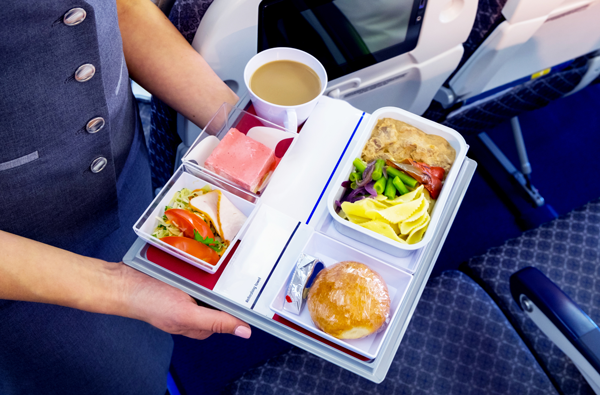
 Airline catering is one of the harshest food production environments imaginable and the reason has little to do with meal preparation. A meal leaves the kitchen, sits in a chilled cart, gets loaded, waits, then reaches a passenger hours later at 35,000 feet. For much of what's on that tray there is no further decontamination step, so whatever is on the surface at assembly travels with it and there is no pulling a batch once the doors are closed.
Timing is crucial so that passengers get their meal on their flight.
Two outbreaks that shaped the rules
In February 1975, a Japanese aircraft left for Copenhagen leaving more than 140 people on board with staphylococcal food poisoning after eating ham omelets. Investigators traced it to a cook in the kitchen with infected lesions on two fingers. This is one of the reasons why most carriers still have flight deck crew eating separately prepared different meals.
 In 2011, another outbreak happened, which is harder to dismiss. Twenty-five cases of Salmonella Heidelberg turned up across Ireland, the Netherlands, Norway, the United States and Canada, all linked to one flight out of Tanzania. The airline's own quality assurance testing came back satisfactory, because samples were taken at the catering unit at the end of production rather than from the food as it was served. End-of-line testing passed while passengers in five countries fell ill later.
What environmental swabs keep finding
The FDA recently issued a warning letter to one airline catering company covering multiple US facilities inspected the previous summer. Investigators recovered Listeria monocytogenes from environmental swabs repeatedly: ten positives, on top of thirty-four recovered the year before, three of those on direct food contact surfaces including stainless steel trays and cutting boards. Another nine came out of the dishwashing facility, all of them in the room where aircraft dishware was cleaned.
Swabs came back positive from the legs of a processing table, the floor beneath the cooling units and the leg of a tilt skillet, none of them priorities on a cleaning rota or places anyone routinely tests with swabs as they aren’t identified as high-risk areas. Sequencing found twelve distinct strains, three of them present in both years (2025 and 2026) and across more than one facility, so the organism was living in the buildings rather than arriving with each delivery. One strain was even matched to clinical isolates from human illness.
In November 2017, health agencies found Listeria in non-food contact areas at an LAX food suppliers facility, mostly in floor drains. Nothing was found in the food and no illnesses were reported, but catering was suspended from the unit for a week at a station running more than 200 daily departures. This had a big financial impact on the airlines involved.
Biofilm and the limits of disinfection
Resident strains survive because bacteria on wet stainless steel build biofilm, a protective layer that behaves nothing like free-floating cells in a suspension test. In one study, Listeria monocytogenes grown on its own was killed in all eighteen cultures tested but grown in a mixed biofilm alongside Pseudomonas it survived disinfection in ten of them.
A 2025 study of drains in a meat plant found the same clone sitting there for at least five years despite routine cleaning with a chlorinated alkaline foam. The cleaning was lifting the surface contaminants without touching the reservoir underneath it and a partly disrupted biofilm will shed viable organisms back onto a surface that then looks clean and often passes inspections.
The limits of a visual check
The World Food Safety Guidelines for Airline Catering require food contact surfaces to be cleaned and sanitized, while non-food contact surfaces should be visibly clean. Verification leans heavily on visual observation, which is subjective. In one study of food contact surfaces in a canteen, more than half the samples returned unacceptable ATP readings, rising to 90% on a single vegetable knife, every one of those surfaces had been cleaned and looked acceptable.
ATP swabbing is useful and most caterers already use this method. Its limit is that a swab tells you about a few square centimeters. In a unit preparing tens of thousands of meals a day, ATP swabbing only covers a fraction of the total surface. Swab the wrong spot and a contaminated facility passes its audit.
Scanning whilst you swab
EIT International's Bactiscan™ range (including the BactiscanPLUS™ shown below) operates on the fringes of the UV spectrum, using four wavelengths to detect the protein shell around bacterial cells and reveal biofilm in real time, with no dyes, no consumables and no waiting on a culture. An operator walks the line and sees where potential contamination grows, including biofilm hidden beneath the glassy layer that builds up on stainless steel through repeated chemical washing.
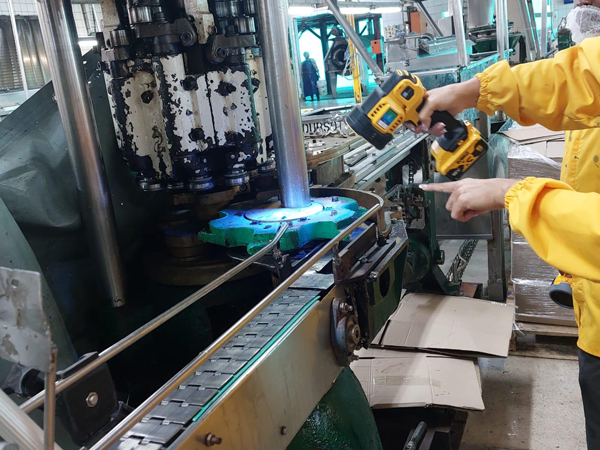 In a flight kitchen the Bactiscan has real practical uses. Operators can scan the tray line and prep benches before the shift to see whether the overnight clean worked. Look around the dish room, the drainage areas and the equipment legs, which is where many airline catering companies positives keep appearing. Once problem areas are found, use ATP swabs to assist in identifying whether a live culture is growing there. In some instances, biofilm shells can be broken so the bacteria is killed underneath but more aggressive cleaning needs to take place to remove the shell left behind. The shells will still fluoresce regardless of whether the bacteria remain. The BactiscanPRO model adds stills and video capture, useful when an airline's audit team arrives or corrective action needs evidence to support the findings.
The airline's side of it
The hygiene risk sits with the caterer, but the consequences land on the airline. EUROCONTROL puts a wide-body intercontinental diversion at around €82,000 before reputational damage enters the sum and a suspended catering contract at a major hub disrupts hundreds of departures overnight.
No scanner replaces HACCP, temperature control, hand hygiene or supplier assurance and Bactiscan isn't a substitute for any of them. It answers a clear question: is the surface a meal is about to be assembled on as clean as it looks? Given how often environmental swab results say otherwise, most flight kitchens would benefit from knowing that before the shift starts rather than after an inspection.
Ready to make your airline catering safety strategy a competitive advantage? Talk to our team about hygiene monitoring systems, risk prevention and how to turn safety into growth