
Assessing what can be saved
Non-destructive testing for disaster recovery teams
When a production plant floods, catches fire or takes a hit from an industrial incident or natural disaster, the clock starts straight away. Every hour a site sits idle costs the operator money and the pressure lands squarely on the recovery team to give a clear answer: what can be saved, what has to go and how quickly can production start again.
The hard part is that a lot of that damage doesn't show on the surface. A plate heat exchanger can look fine and still be leaking internally, a steel tank can pass a visual check and hide a crack that fails weeks later or a cleaned production line can look spotless and still carry a bacterial load that ruins the first batch back. Recovery teams are often forced to make judgement calls with incomplete information and those calls carry real risk, either scrapping kit that was fine or clearing equipment that wasn't.
Three products from EIT International take a lot of that guesswork out of the process. All three are non-invasive, run by a single operator and give an answer on site, rather than sending samples or data off and waiting days for the results. For a recovery business working against a deadline, that combination matters.
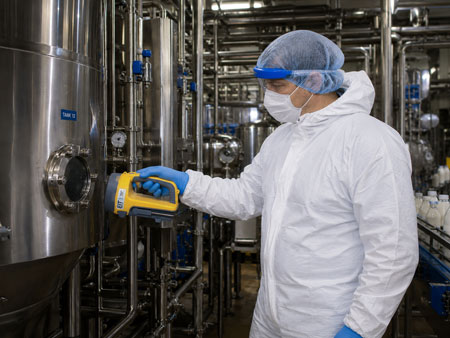 Bactiscan: Seeing contamination the eye can't
Water damage, sewage ingress, fire and the long shutdowns that follow all create ideal conditions for bacteria, biofilm and mould to take hold. The problem is that a surface can be cleaned, look perfectly clean to the naked eye and still carry contamination that a visual inspection will never pick up. In food and pharmaceutical settings, that's the difference between a successful restart or a failed audit, a recalled batch or worse.
Bactiscan detects biofilms on surfaces using wave-alternating UV light. It's handheld, lightweight and needs very little training, so a recovery team can sweep an area quickly and see contamination sites that would otherwise stay hidden. It's often used as a first pass before ATP swab testing, pointing the team straight to the spots that need attention rather than swabbing blind across a whole facility.
For disaster recovery work, that turns cleaning from a hope into a checked process. The team can show a surface was contaminated, show it again after cleaning and hand the client evidence that the area is genuinely ready for use.
Gappscan: Proving plate heat exchangers before they go back into service
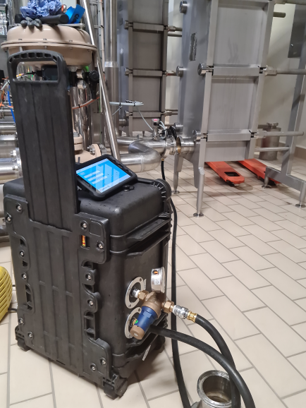 Plate heat exchangers are everywhere in food, beverage and pharmaceutical plants and they're one of the trickiest items to sign off after an incident. Flood water, fire suppression, thermal shock or physical impact can all compromise the plates and a breach means product contamination the moment the line restarts.
The traditional recovery protocols are both bad:
1: strip the unit down, which takes time and skilled labour
or
2: replace it outright, which is expensive and slow to source.
With the Gappscan, there’s no need to do either of the above, it tests the integrity of a plate heat changer without dismantling it and without dyes, using only the power of water. One operator, a compact bit of kit and a clear pass or fail.
For a recovery team, that means a firm answer on whether a critical asset can go straight back into service. If it passes, the operator avoids the cost and downtime of a needless replacement and the site restarts sooner. If it fails, the team has caught a contamination risk before it reached the first production run. Either way, the decision is backed by evidence rather than a hopeful guess.
Magnerscan: Finding the cracks that cause the next failure
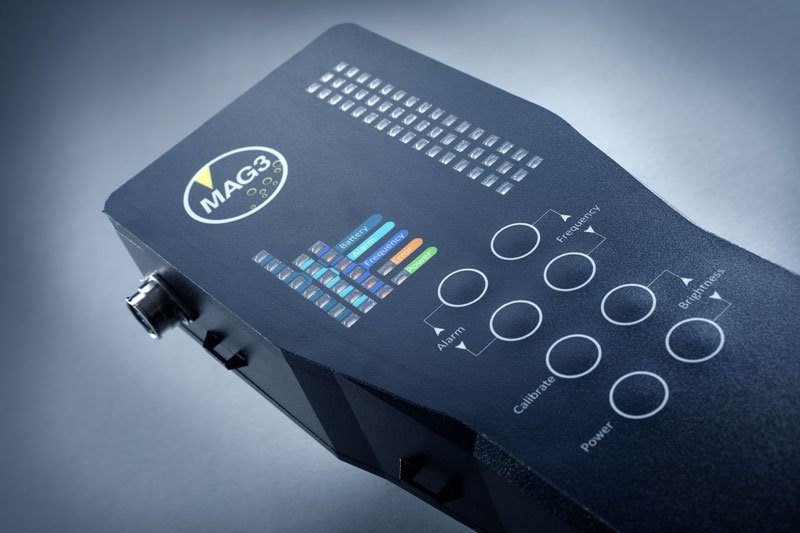 Fire, explosion, collapse, flooding and impact all put stress on metal. The damage that worries recovery teams most is the kind you can't see including hairline cracks and pinholes in tanks, vessels, structural steel, rails, cranes, presses and heavy machinery. Left in place, these are the faults that cause a structural failure or a contamination issues down the line, often long after the recovery task is signed off.
Magnerscan (MAG3) inspects metallic structures on site for exactly these defects. No need to move the asset, no need to take it out of the building. The operator works around the structure where it stands and identifies cracks and pinholes before they turn into a preventable incident.
That does three jobs for a recovery business, it protects the client, because faults get found and dealt with rather than left to fail later, it protects the customers and end users from harm and it protects the recovery firm's own reputational position, because there's a documented inspection showing the structure was checked and cleared. When an insurer or an auditor asks how the sign-off was reached, that record is worth a great deal.
Why this matters for recovery businesses
Disaster recovery lives or dies on two things: speed and trust. Clients want their site back fast and they want to know the sign-off means what it says. These three tools from EIT International support both at once.
They're quick, because the results are available on site straightaway instead of from a lab days later. They're non-invasive, so assessing an asset doesn't damage it or force a needless replacement and they need only one operator with minimal training, which keeps a lean recovery crew moving across a site rather than waiting on specialists.
Just as important, each one produces evidence of a pass (or fail) on a plate heat exchanger, a cleared structural inspection for storage vessels and tanks, and before-and-after reports on a contaminated surface. In a business where insurers, auditors and clients all want to know how a decision was reached, that kind of record is as valuable as the decision itself.
Recovery teams already do the hard, physical work of getting a damaged site back up and running. Gappscan, Magnerscan and Bactiscan give them a way to quickly inspect and identify any less obvious issues too, catching the leaks, cracks and contamination that would otherwise show up later, when they're far harder and more expensive to fix.
Want to discuss how detection systems can be integrated into your disaster management and maintenance protocols? Contact a product specialist today