
Protecting uptime: plate heat exchanger integrity in the modern data centre
Plate heat exchangers seldom feature in conversations about data centre performance. They are not the racks, the chillers or the switchgear that tend to command attention. Yet in a growing number of facilities, they sit at a critical junction in the cooling chain, and their condition has a direct bearing on the metric that matters most: uptime.
The role of the plate heat exchanger
 In most liquid-cooled designs, a plate heat exchanger separates the facility water system from the technology cooling loop. It transfers heat between the two while keeping the fluids apart, allowing the wider site infrastructure to do its work without ever mixing with the water that circulates close to the hardware. As high-density and AI workloads accelerate the move to liquid cooling, the number of exchangers in service is rising, and with it the consequence of any single unit failing.
Why integrity has become an uptime issue
The principal risk is cross-contamination. A breach in a single plate allows fluid from one loop to pass into the other: facility-side water carrying treatment chemicals, glycol or particulate entering the clean loop that feeds cold plates and rear-door heat exchangers. Those channels are narrow and the tolerances fine, so contamination can foul them quickly, with consequences ranging from degraded cooling performance through to damaged hardware and the unplanned downtime operators are contractually bound to avoid.
Cracked plates frequently present no visible symptom until the failure is well advanced. The first indication is often a temperature or performance anomaly rather than a maintenance flag, by which point, the margin for a measured response has already narrowed. In an environment where a single incident can cascade across a hall, the inability to see a defect forming is a meaningful exposure.
The constraint of continuous operation
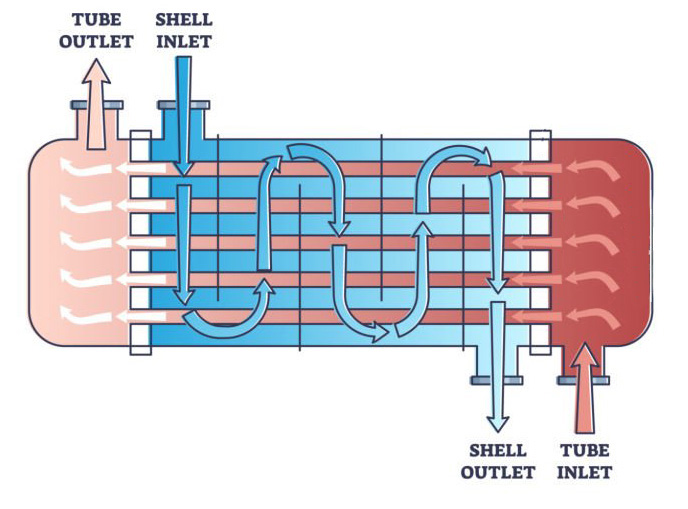 Data centres are built to run continuously; their availability measured against demanding service level agreements. This creates a tension every maintenance engineer will recognise. Establishing the true integrity of a plate pack has traditionally meant removing the exchanger from service and dismantling it, an activity fundamentally at odds with a facility that cannot stop. The practical result is that integrity testing is deferred to a planned shutdown or omitted altogether, and exchangers are left to operate on assumption rather than evidence.
The limits of conventional testing
Established methods do little to resolve that tension. Dye penetrant testing requires the unit to be opened up, a process that can take up to 48 hours per test and produces chemical waste that must then be handled and disposed of. The outcome is typically a simple pass or fail, with little indication of how far a plate has degraded or how long it might safely remain in service. A test that imposes a day or more of downtime is difficult to justify with any regularity in an environment designed around availability.
A non-invasive alternative
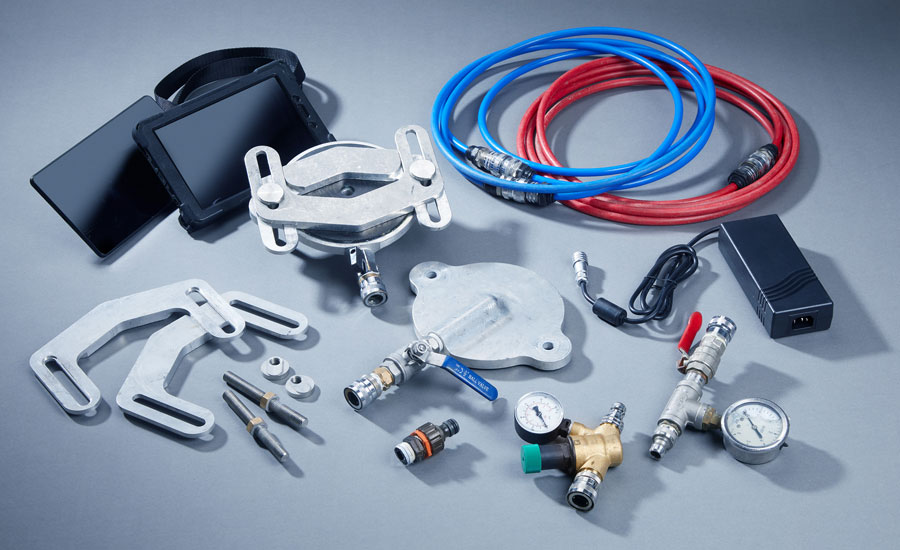 Gappscan, developed by EIT International, approaches the problem differently. It tests plate heat exchanger integrity non-invasively, with the unit left fully assembled. Multi-fit clamps allow it to connect to the exchanger as a single unit; water is then introduced and pressurised, and the system records pressure fluctuations as small as one micron. That sensitivity allows it to detect defects down to 5 microns in size. It is the only system available that measures defect size accurately, so the result is not a binary verdict but a true picture of the condition of the plate heat exchanger as a whole.
The practical characteristics are well matched to a live facility. A test takes three minutes, with results captured on a tablet running dedicated software, ready to feed into a preventative maintenance programme. The equipment is portable, arriving in a single case and operable by one person. Because it relies on pressurised water alone, there are no dyes or chemicals to manage, which simplifies both the test itself and the task of meeting ever increasing environmentally friendly requirements.
The underlying technology is not unproven. Gappscan is already established in regulated sectors such as dairy, brewing, food and pharmaceutical production, where an undetected breach between loops can contaminate product and trigger a costly recall. A data centre presents a different version of the same problem: two fluids that must never meet, separated by a thin metal plate whose condition is otherwise impossible to see. The detection principle that protects a production line applies just as directly to the plant protecting a data hall.
 From reactive to condition-based maintenance
Taken together, these capabilities support a move from reactive repair to condition-based maintenance. Without the penalty of downtime, heat exchangers can be tested as often as their criticality warrants. Engineers can identify minute defects while they remain minor, schedule plate replacement in a controlled way, and build a documented history of each exchanger’s condition over time. That record serves both audit compliance and the kind of trend analysis that allows degradation to be anticipated rather than discovered.
Redundancy and sound design will remain central to data centre resilience, but neither substitutes for knowing the actual state of the equipment in service. As liquid cooling becomes more widespread, the plate heat exchangers underpinning it warrant the same scrutiny applied to other critical system points. The ability to verify their integrity without interrupting operations is what makes that scrutiny practical. Treating plate heat exchanger integrity as a measurable parameter, checked regularly rather than assumed annually, is a modest change in approach that tends to pay for itself the first time it heads off an incident.
Contact EIT International
Ready to make your maintenance strategy a competitive advantage? Talk to our team about preventative control systems, risk prevention and how to turn safety into growth.