
Food Safety in the Spotlight - Resilience in an Era of Constant Pressure
 Food safety rarely fails quietly. When it fails, it can do so in full public view, swiftly, expensively and with consequences that ripple across brands, borders and trust. Recalls go viral, outbreaks cross continents and consumer confidence erodes in hours, not months, reshaping expectations and public perceptions overnight.
With 2026 underway and looking beyond, the question is no longer whether pressure on food safety systems will rise…because it will.
The real question is whether organisations are genuinely prepared when it does.
A Shifting Food Safety Landscape
The global food system is becoming more complex at precisely the moment traditional safeguards are under strain. Supply chains stretch across continents, ingredients change hands multiple times before reaching production, products are more processed, more composite and more sensitive to failure than ever before. At the same time, public oversight is evolving too. Government agencies continue to set the baseline, but inspection frequency, on‑site presence and regulatory resources are increasingly constrained. In many regions, enforcement is becoming more risk‑based and less visible, creating a critical shift, with responsibility for food safety moving decisively from regulators to the industry itself.
From Compliance to Continuous Control
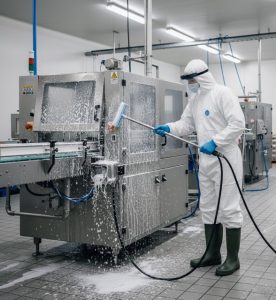 For decades, food safety strategies have been built around periodic audits, scheduled testing and historical records. These approaches remain necessary, but they are no longer sufficient on their own. Risk does not operate on an audit calendar and contamination events develop in real time, often in places that traditional monitoring cannot easily see. Waiting for test results or relying on infrequent inspections increases the gap between exposure and response. The future of food safety lies in continuous control, where risks are identified early, trends are visible and corrective action happens before failure becomes public.
Culture Under Pressure
Food safety systems are only as strong as the culture that supports them, so when margins tighten, experienced staff leave, or production pressure increases, weak protocol cultures fracture first. Procedures may exist on paper, but without visibility, ownership and confidence, standards erode quietly.
In the coming years, organisations will be tested on their ability to maintain food safety discipline under commercial stress, not just during audits, but on ordinary production days. Transparency, data‑driven decision‑making and shared accountability will increasingly define high‑performing food safety cultures.
Complexity Is the New Normal
Modern food production introduces risks that legacy hygiene regimes were never designed to manage. Closed systems, heat exchangers, high‑throughput lines and ultra‑processed formulations create blind spots where contamination can persist undetected. Traditional surface swabbing and end‑product testing offer only snapshots of performance. They often confirm what has already happened, rather than proactively revealing what is developing.
As products and processes grow more complex, the cost of not knowing grows with them.
The Cost of Reaction
Food safety failures are no longer isolated operational events; they are brand‑level crises with global reach. Beyond recalls and lost product, organisations can face prolonged shutdowns, deep‑clean costs, increased regulatory scrutiny and enforcement actions, compounded by a loss of retailer confidence and ultimately long‑term brand reputational damage.
By contrast, organisations that invest in early risk assessment, detection and prevention measures are better positioned to protect both consumers and commercial value. Food safety is increasingly recognised not as a cost of doing business, but as a core pillar of operational resilience.
Leadership in the Next Era of Food Safety
The future food safety landscape will favour organisations that:
- Detect risks early rather than explain failures later
- Maintain standards when oversight is light and pressure is high
- Treat food safety as a strategic capability, not a compliance obligation
When the next incident occurs and it will… the defining difference will not be intent, but readiness.
Turning Insight into Action
This is where specialist technologies and partners play a critical role. At EIT International we support food manufacturers worldwide with advanced solutions designed to make food safety risks visible, measurable and manageable. Our portfolio includes technologies for:
- Rapid detection of bacteria and biofilms on surfaces
- Verification of hygiene effectiveness in real time
- Integrity testing of heat exchangers and closed systems
- Validation of pasteurisation flow and residence time
By enabling earlier risk detection and stronger process control, we help organisations move from reactive response to proactive resilience.
The question is no longer whether food safety pressure will increase, it is whether your organisation will be apologising and playing catch-up, or, confidently demonstrating that it has done everything to be ready to keep risks at bay.
Ready to make your food safety strategy a competitive advantage? Talk to our team about hygiene monitoring systems, risk prevention and how to turn safety into growth