
The ‘Invisible’ Threat: Navigating Biofilm and Bacterial Contamination in Low and No-Alcohol Brewing
The global beverage industry is currently witnessing a huge shift. Driven by a surge in ‘mindful drinking’, the low and no-alcohol (LNA) sector, comprising beers, ciders and spirits with less than 0.5% ABV, is no longer a niche market but a primary driver of innovation. However, this ‘NoLo’ 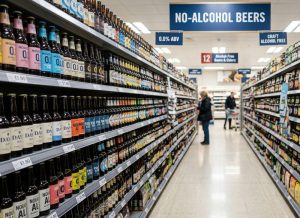 revolution brings with it a significant, often invisible, technical challenge. By removing the very element that gives beer its name, alcohol, brewers are stripping away their primary defence against microbial spoilage and pathogenic hazards.
The Vanishing Shield: Why LNA Drinks are Vulnerable
In traditional brewing, beer is considered a biologically stable product. This stability is maintained by four critical hurdles:
- Ethanol Content: Usually 4–6% ABV, which acts as a potent antimicrobial agent by disrupting bacterial cell membranes.
- Low pH: Traditional fermentation typically drops the pH to between 3.8 and 4.2, an acidic range that inhibits most pathogens.
- Hop Alpha-Acids: These provide bitterness but also possess strong antibacterial properties against Gram-positive bacteria.
- Nutrient Depletion: Yeast consumes most fermentable sugars, leaving little fuel for invading microbes.
In the production of LNA drinks, these hurdles are either lowered or removed entirely. Low-alcohol beers often have a higher pH (frequently >4.5) and significant levels of residual sugars (maltodextrins and simple sugars) because fermentation is either stopped early or the alcohol is removed via vacuum distillation. This creates a microbial playground where not only traditional spoilage organisms like Lactobacillus and Pediococcus thrive, but where even human pathogens like E. coli, Salmonella and Listeria can survive and, in some cases, proliferate.
Biofilms: The Hidden Reservoir of Contamination
While planktonic (free-floating) bacteria are a concern, the more insidious threat in a brewery is the biofilm. Biofilms are complex, multicellular communities of microorganisms that adhere to surfaces, such as the interior of fermentation tanks, heat exchangers and pipework.
Biofilms are the fortresses of the microbial world. Once established on stainless steel surfaces, they are up to 1,500 times more resistant to standard cleaning and heat than free-floating bacteria. In LNA production, the lack of ethanol means these biofilms can form more rapidly and harbour a wider variety of species. If a small fragment of a biofilm breaks off (a process known as sloughing), it can contaminate an entire batch downstream, leading to off-flavours, turbidity, or, in the worst-case scenario, a major health risk and product recall.
The Failure of Legacy Detection Methods
For decades, breweries have relied on two primary methods for hygiene validation: visual inspection and ATP (Adenosine Triphosphate) swabbing. In the high-stakes environment of LNA brewing, these methods are increasingly seen as inadequate.
- Visual Inspection: Biofilms are often transparent or mirror the colour of the stainless steel, making them invisible to the naked eye under standard white light.
- ATP Swabbing: While effective for detecting living matter, ATP swabs only test a tiny fraction of a surface (usually a 10cm x 10cm area). In a 50,000-litre tank, this is equivalent to looking for a needle in a haystack. If the swab misses the specific spot where a biofilm is forming, the brewer receives a false pass, leading to a false sense of security.
EIT International: Revolutionising Brewery Hygiene
To combat these heightened risks, brewers are turning to advanced detection technologies from EIT International. Our suite of products provides a proactive, science-based approach to finding contamination before it reaches the consumer.
- Bactiscan™ and BactiscanPRO™: Seeing the Unseen
The flagship tool for biofilm detection is the Bactiscan™. Unlike standard UV torches, Bactiscan utilizes a proprietary wave-alternating UV light technology. It works by exciting the protein shells (S-layers) of bacteria and the EPS matrix of biofilms, causing them to fluoresce with a distinct green/turquoise glow.
The advantage of Bactiscan is its scale. Instead of swabbing a tiny area, an operative can scan an entire fermentation vessel or storage tank in minutes. It identifies contamination in real-time, allowing for immediate remedial cleaning. The BactiscanPRO version adds the capability for still photography and video capture, which is essential for audit trails and proving compliance.
- Bactiscope™: Extending your reach
Contamination rarely happens on easy-to-reach flat surfaces. It often starts in the ‘dead legs’ of pipework, around gaskets, or inside valve manifolds. The Bactiscope™ is a specialised camera probe that brings our UV detection technology into these inaccessible areas. By feeding the probe into pipework, brewers can inspect the integrity of their Clean-in-Place (CIP) cycles in the most vulnerable parts of the production line.
- Magnerscan and Gappscan: Integrity is Key
Biofilms often take root in microscopic cracks or ‘pitting’ in stainless steel caused by corrosive cleaning chemicals. Magnerscan is used for surface integrity and crack detection, ensuring that the vessels themselves don't provide a sanctuary for bacteria. Additionally, Gappscan is the industry leader for testing heat exchanger integrity. Since heat exchangers (coolers) are a primary site for cross-contamination between unpasteurized wort and finished beer, ensuring they are leak-free is non-negotiable for LNA safety.
 Conclusion: Protecting the Brand
The transition to low and no-alcohol brewing is an exciting frontier, but it requires a total rethink of food safety protocols. The "alcohol shield" is gone, and the margins for error have vanished.
By integrating EIT International’s preventative detection systems, brewers can move from a reactive "clean and hope" model to a proactive "detect and eliminate" strategy. These tools do more than just find bacteria; they protect the brand's reputation, reduce the risk of costly recalls and ensure that the growing population of NoLo drinkers can enjoy their beverages with total peace of mind. For the modern brewer, the question is no longer whether they can afford this technology, but whether they can afford to brew without it.
Ready to make your brewing safety strategy a competitive advantage? Talk to our team about hygiene monitoring systems and risk prevention